วิธีการคำนวณฟังก์ชัน sigmoid ใน python (พร้อมตัวอย่าง)
ฟังก์ชันซิกมอยด์ เป็นฟังก์ชันทางคณิตศาสตร์ที่แสดงเส้นโค้งรูปตัว “S” เมื่อพล็อต
ตัวอย่างที่พบบ่อยที่สุดของฟังก์ชัน sigmoid คือฟังก์ชัน logistic sigmoid ซึ่งคำนวณได้ดังนี้:
ฉ(x) = 1 / (1 + อี -x )
วิธีที่ง่ายที่สุดในการคำนวณฟังก์ชัน sigmoid ใน Python คือการใช้ฟังก์ชัน expit() จากไลบรารี SciPy ซึ่งใช้ไวยากรณ์พื้นฐานต่อไปนี้:
 from scipy. special import expit

#calculate sigmoid function for x = 2.5
expire(2.5)
ตัวอย่างต่อไปนี้แสดงวิธีใช้ฟังก์ชันนี้ในทางปฏิบัติ
ตัวอย่างที่ 1: คำนวณฟังก์ชันซิกมอยด์สำหรับค่า
รหัสต่อไปนี้แสดงวิธีการคำนวณฟังก์ชัน sigmoid สำหรับค่า x = 2.5:
 from scipy. special import expit

#calculate sigmoid function for x = 2.5
expire(2.5)

0.9241418199787566
ค่าของฟังก์ชันซิกมอยด์สำหรับ x = 2.5 คือ 0.924
เราสามารถยืนยันสิ่งนี้ได้โดยการคำนวณค่าด้วยตนเอง:
- ฉ(x) = 1 / (1 + อี -x )
- ฉ(x) = 1 / (1 + อี -2.5 )
- ฉ(x) = 1 / (1 + 0.082)
- ฉ(x) = 0.924
ตัวอย่างที่ 2: คำนวณฟังก์ชัน Sigmoid สำหรับหลายค่า
รหัสต่อไปนี้แสดงวิธีคำนวณฟังก์ชัน sigmoid สำหรับค่า x หลายค่าในคราวเดียว:
 from scipy. special import expit

#define list of values
values = [-2, -1, 0, 1, 2]

#calculate sigmoid function for each value in list
expire(values)

array([0.11920292, 0.26894142, 0.5, 0.73105858, 0.88079708])
ตัวอย่างที่ 3: การพล็อตฟังก์ชันซิกมอยด์สำหรับช่วงของค่า
รหัสต่อไปนี้แสดงวิธีการพล็อตค่าของฟังก์ชัน sigmoid สำหรับช่วงของค่า x โดยใช้ matplotlib :
 import matplotlib. pyplot as plt
from scipy. special import expit
import numpy as np

#define range of x-values
x = np. linspace (-10, 10, 100)

#calculate sigmoid function for each x-value
y = expire(x)

#createplot
plt. plot (x, y)
plt. xlabel (' x ')
plt. ylabel (' F(x) ')

#displayplot
plt. show ()
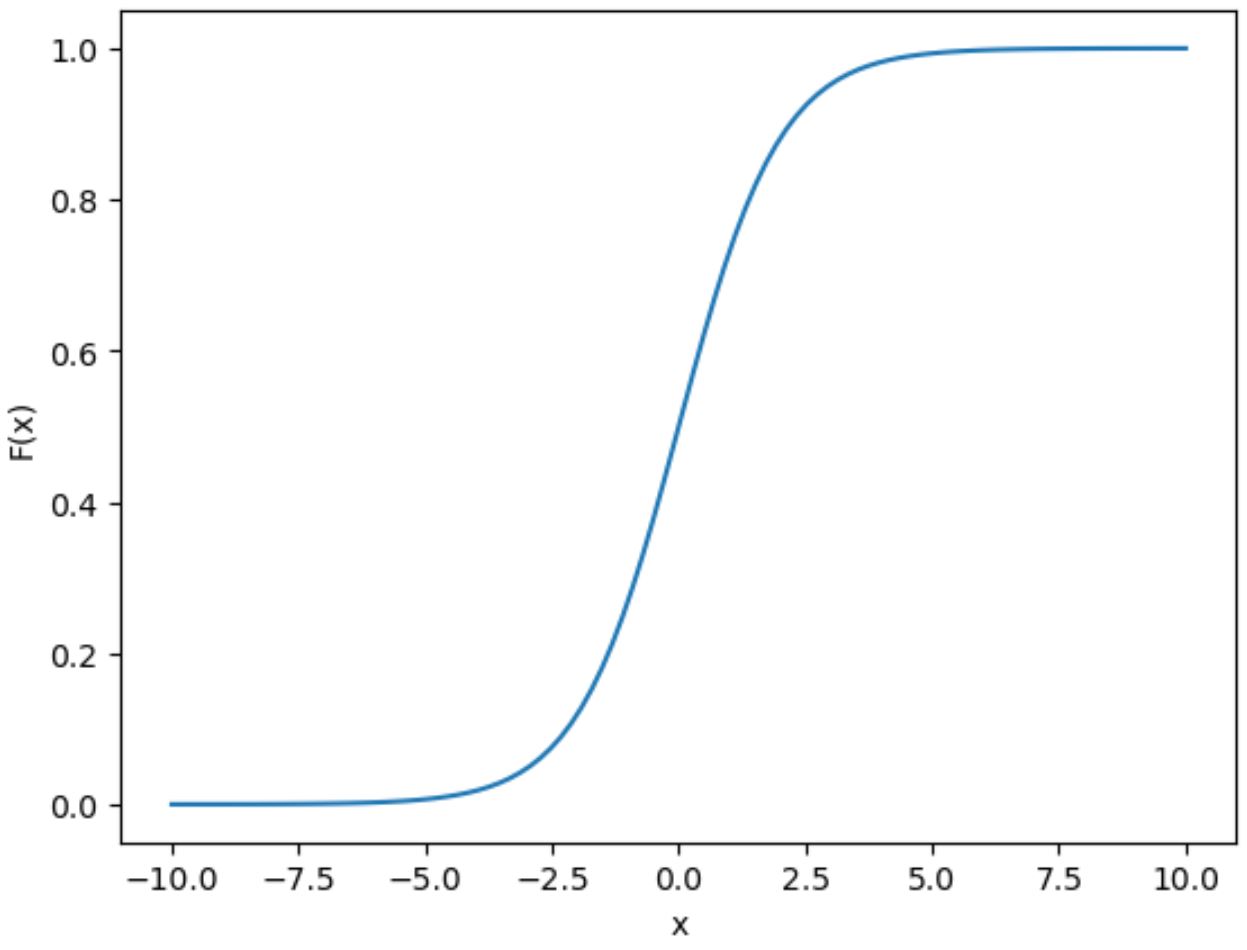
โปรดทราบว่าโครงเรื่องแสดงลักษณะเส้นโค้งรูปตัว “S” ของฟังก์ชันซิกมอยด์
แหล่งข้อมูลเพิ่มเติม
บทช่วยสอนต่อไปนี้จะอธิบายวิธีดำเนินการทั่วไปอื่นๆ ใน Python:
วิธีการดำเนินการถดถอยโลจิสติกใน Python
วิธีพล็อตกราฟการถดถอยโลจิสติกใน Python
เกี่ยวกับผู้แต่ง

ดร.เบนจามิน แอนเดอร์สัน
สวัสดี ฉันชื่อเบนจามิน ศาสตราจารย์สถิติเกษียณอายุแล้ว และผันตัวมาเป็นครูสอนสถิติโดยเฉพาะ ด้วยประสบการณ์และความเชี่ยวชาญที่กว้างขวางในสาขาสถิติ ฉันกระตือรือร้นที่จะแบ่งปันความรู้ของฉันเพื่อเสริมศักยภาพนักเรียนผ่าน Statorials. รู้เพิ่มเติม